The scratching usually starts around midnight. Then comes the heavy thumping, the torn shingles, or the surprise leak near a soffit or vent. If you are searching for the best raccoon deterrents for roofs, you are likely already dealing with an active problem – not a theory. On rooflines in New York City and New Jersey, raccoons are persistent, strong, and far more destructive than many property owners expect.
A raccoon on the roof is rarely just passing through. It may be testing weak entry points, targeting attic access, using gutters as a travel route, or returning to a den site it already likes. That is why the right deterrent is not just about scaring the animal once. It is about making the roof inaccessible, unattractive, and difficult to revisit.
What actually works on a roof
The best raccoon deterrents for roofs are the ones that address how raccoons behave. They climb well, remember safe routes, and quickly adapt to anything that is all noise and no consequence. A cheap gadget may work for a night or two. A raccoon that has found food, shelter, or a denning space will usually come back.
That is why physical exclusion is the most reliable option. Motion-based tools can help. Scent deterrents can have a limited role. But if vents, soffits, fascia edges, or roof returns are already vulnerable, the deterrent needs to be part of a larger roof protection plan.
1. Heavy-duty exclusion over roof entry points
If you only choose one strategy, choose exclusion. Professional-grade screening and hardware barriers installed over roof vents, attic fan openings, soffit gaps, and other vulnerable points are the most effective long-term deterrent.
This matters because raccoons do not need a large opening to start causing damage. They can pry, tear, and widen weak areas quickly, especially around roof intersections and rotted wood. Once a female raccoon identifies a quiet attic as a den site, she can do major damage trying to get in.
The trade-off is cost and installation quality. Poorly installed screening can trap moisture, fail during storms, or be ripped off. Exclusion works best when the structure is inspected first so every likely access point is identified, not just the obvious one.
2. Ridge vent and roof vent protection
Standard vents are a common weak spot. Many roof systems were not designed with urban wildlife pressure in mind, and raccoons know where the vulnerabilities are. Roof vents, ridge vents, and gable transitions often become the first target.
Specialized vent protection is one of the best raccoon deterrents for roofs because it solves a specific access problem. Instead of trying to scare the animal away from the whole roof, it blocks the exact locations raccoons use to enter.
This only works if it is species-appropriate and properly secured. Light plastic covers or generic vent cages may not hold up. On homes with older roofing materials or previous patchwork repairs, reinforcement may be needed before vent protection can really do its job.
3. Motion-activated lights and alarms
Motion-activated deterrents can help when raccoons are using the roof as a travel path rather than a den site. Bright lights, sudden sound, or a combination unit may interrupt the animal enough to push it elsewhere.
These devices are most useful early, before a raccoon becomes comfortable on the property. They can also support other deterrents by making repeat visits less predictable and less comfortable.
Still, this is where many homeowners waste time and money. Raccoons in dense neighborhoods get used to people, headlights, HVAC noise, and city activity. A motion device can be effective for some properties and useless for others. If there is food nearby, easy shelter access, or a nesting mother, light and sound alone usually will not be enough.
4. Gutter guards and roofline cleanup
A roof does not become attractive to raccoons by accident. Overflowing gutters, overhanging limbs, accumulated debris, and easy climbing routes all make roof access simpler. Gutter guards help by reducing debris buildup and limiting one of the pathways raccoons use to explore fascia and soffit lines.
Tree trimming also matters, especially where branches touch or hover close to the roof. In many NYC and NJ neighborhoods, raccoons use fences, garages, sheds, and nearby trees like a connected highway. If the roof can be reached without much effort, deterrents have a harder job.
This is less dramatic than a flashing device or spray repellent, but often more effective. Habitat correction does not remove an active raccoon by itself, but it reduces the reasons the roof keeps getting visited.
5. Scent-based raccoon repellents
Scent repellents are popular because they are easy to buy and easy to apply. Predator urine products, ammonia-based solutions, and commercial raccoon repellents are all marketed as roof deterrents.
In practice, results are mixed. Outdoors, scent breaks down fast from rain, heat, and wind. On roofs, sun exposure and drainage make reapplication frequent. Some products can also create odor problems for occupants or tenants, which becomes a poor trade in multifamily or commercial settings.
Scent deterrents may help in short-term, low-pressure situations where raccoons are only investigating the area. They are not a dependable answer for repeated activity or structural entry attempts. If you use them at all, think of them as a temporary support measure, not a primary defense.
6. Roof-mounted prickly barriers and anti-climb surfaces
Physical surface deterrents can work on narrow ledges, parapet edges, and repeated landing spots. These products are designed to make footing uncomfortable and discourage loitering without causing harm.
They can be effective on commercial buildings and some residential roof sections where raccoons repeatedly pause before probing vents or trim. The problem is that roofs are complex. A barrier that works on one edge does nothing if the animal can approach from another side or simply climb around it.
Installation also needs care. A poorly placed surface deterrent can interfere with maintenance, damage roofing materials, or create drainage issues. This is one of those tools that can help in a very specific application, but it is not a broad solution on its own.
7. Professional trapping paired with exclusion
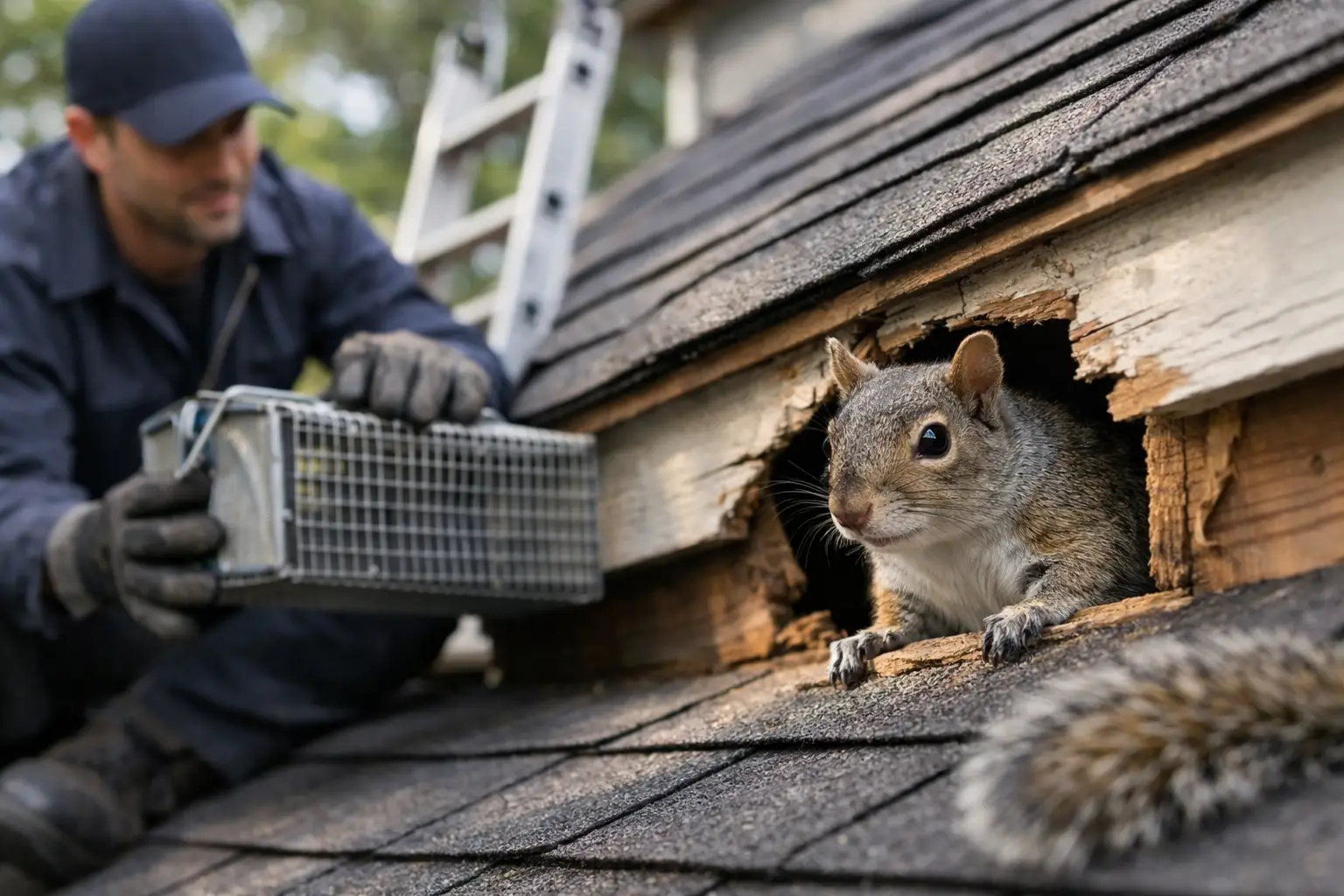
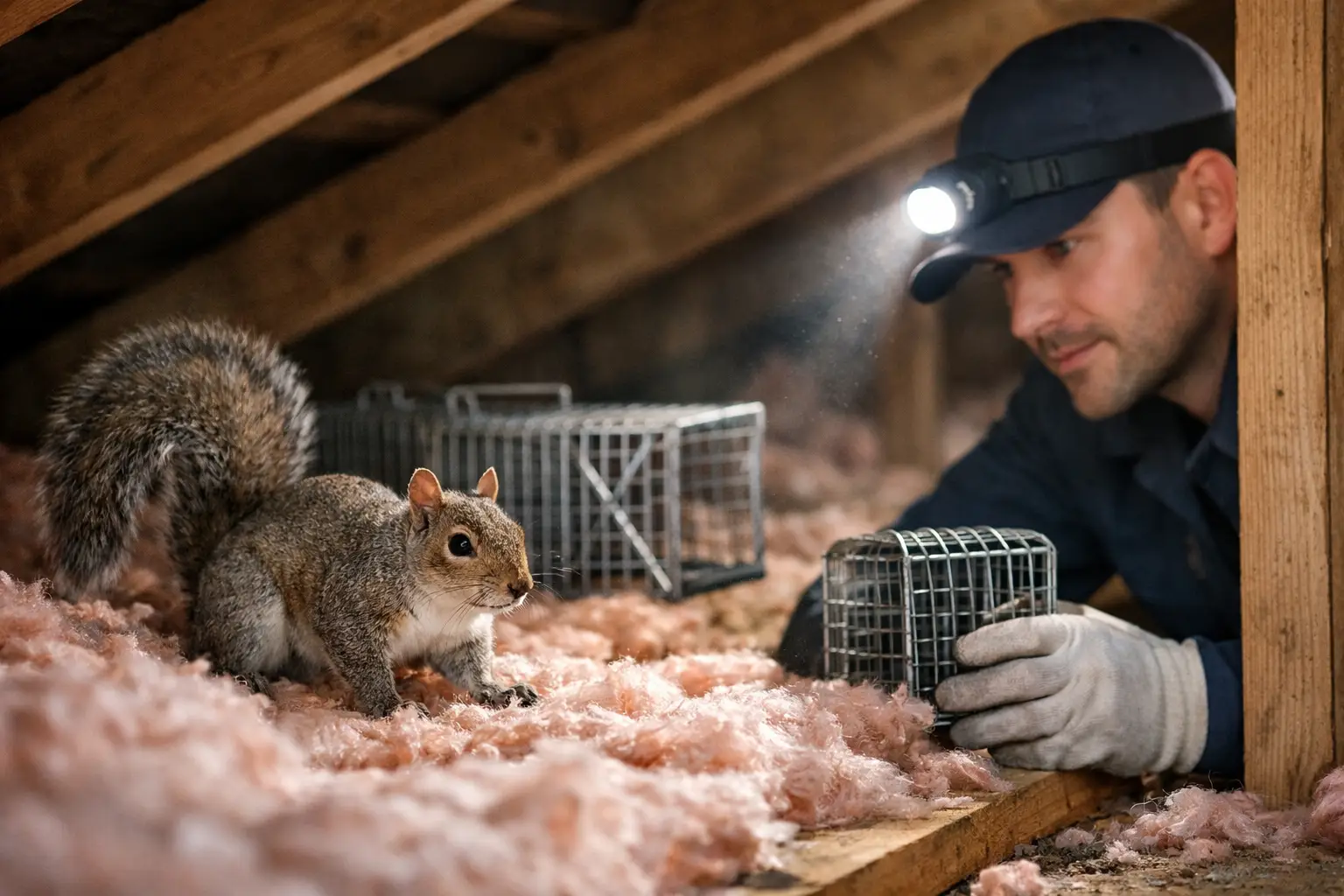
If raccoons are already denning, breeding, or returning night after night, the best deterrent is often not a deterrent alone. It is humane removal followed by immediate sealing and repair. That is especially true when there are noises in the attic, visible damage around vents, droppings, or strong odors.
This is the point where do-it-yourself efforts often fail. If a raccoon has young inside, sealing the entry can create a worse emergency. If an adult is trapped out but secondary openings remain, another raccoon may move in. And if contamination is present, removal without cleanup still leaves a health and odor issue behind.
For active roof and attic intrusions, a full-service wildlife response is usually the most cost-effective path because it addresses the animal, the entry point, and the damage in one process.
How to choose the right roof deterrent
The right choice depends on what the raccoon is doing. If it is crossing the roof occasionally, motion devices and habitat changes may be enough. If it is clawing at soffits or vents, exclusion should move to the top of the list. If there is already entry, sounds in the attic, or visible tearing, deterrents alone are no longer the right tool.
Property type also matters. A single-family home with mature trees has different pressure points than a brownstone, warehouse, or multifamily building with interconnected rooflines. In urban areas, raccoons often move between structures, so a fix that looks complete from the ground may still leave side access or rear roof vulnerabilities.
That is why experienced inspection matters. The best product on paper can fail if it is applied to the wrong part of the structure.
When roof raccoon activity becomes an urgent call
A raccoon problem moves from nuisance to urgent fast. Torn shingles, chewed vents, soffit damage, attic contamination, and nesting activity all raise the stakes. So does any sign of animals near occupied upper floors, common areas, or tenant complaints in multifamily properties.
If there is a baby raccoon issue, a strong odor, water intrusion, or repeated nighttime activity despite deterrents, it is time for a professional response. Humane trapping, removal, sanitization, and exclusion are not separate issues when raccoons target a roof. They are part of the same job.
Animal Control NYC & NJ handles these situations the way they need to be handled – quickly, safely, and with repair-focused follow-through. Because the real goal is not to chase a raccoon off for one night. It is to keep your roof, attic, and building protected after the noise stops.
If raccoons are testing your roofline, do not wait for a small access point to become a major repair. The sooner the weak spots are found and secured, the easier it is to stop the damage before it moves inside.