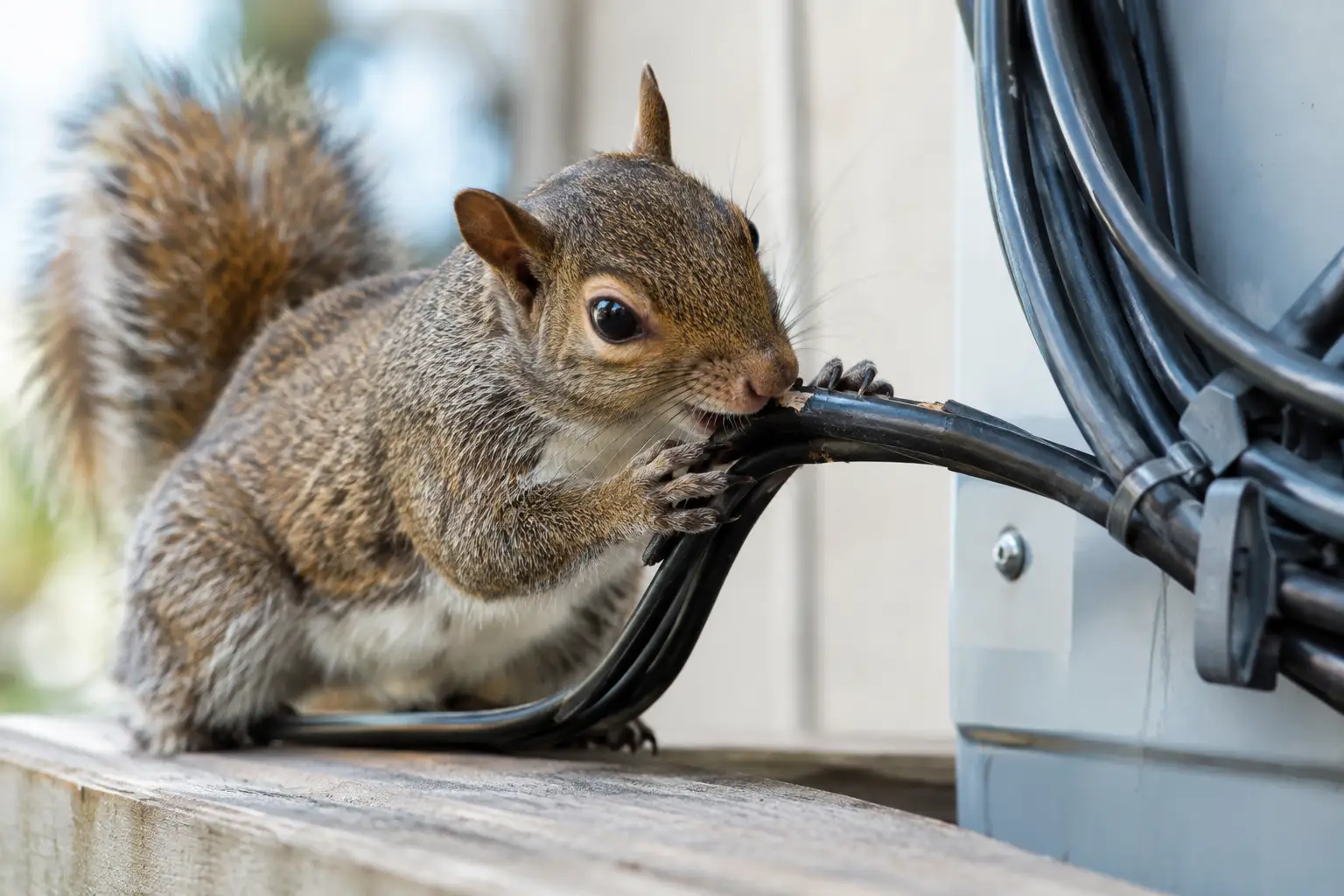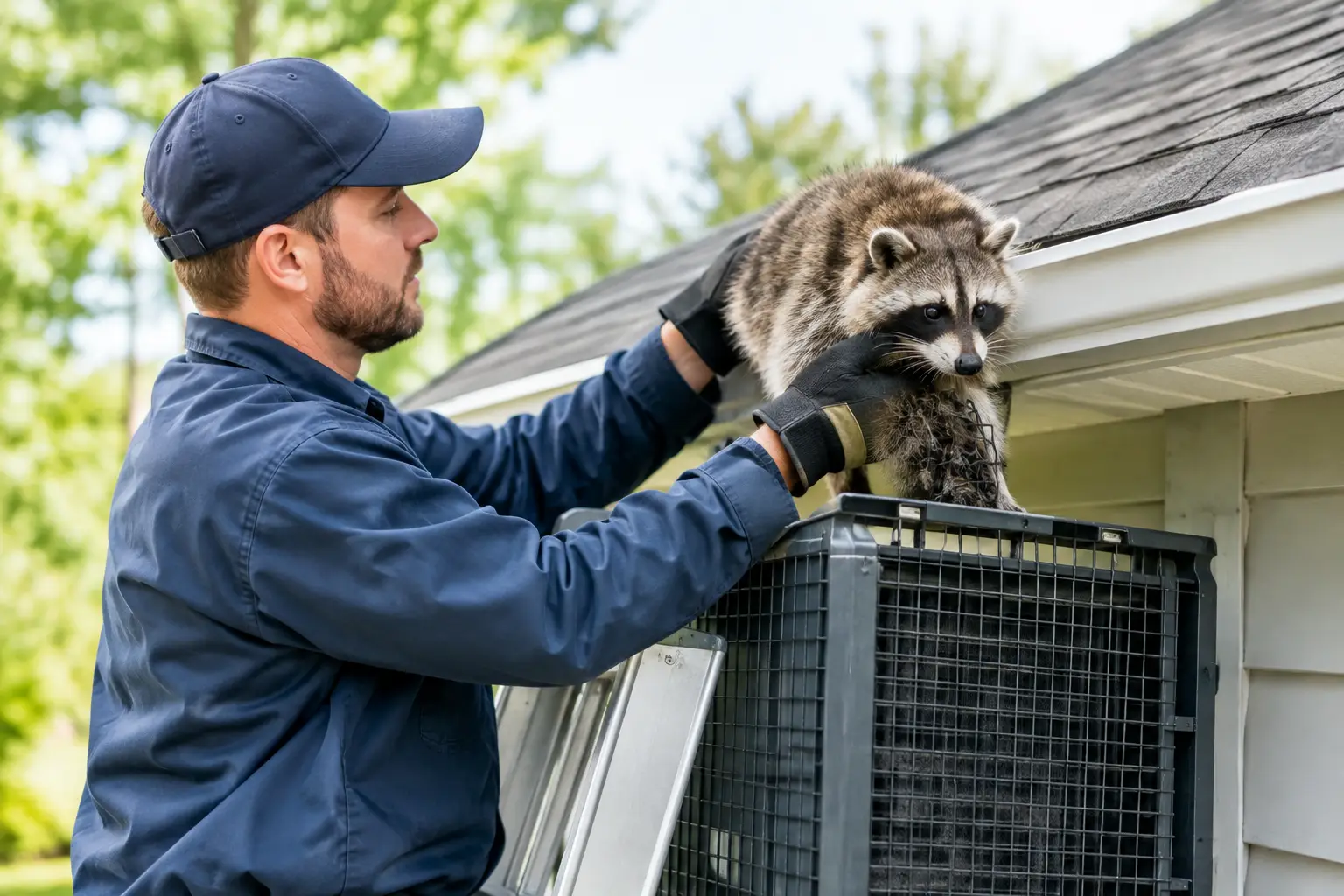
You usually hear squirrels before you see the damage. The scratching starts at sunrise, then comes the chewing, insulation disturbance, and the smell that follows if nesting material or waste builds up. The best squirrel exclusion methods are the ones that stop entry at the structure level, not the ones that just chase squirrels from one corner of the property to another.
For homeowners, landlords, and property managers in NYC and NJ, squirrel problems are rarely just about the animal itself. Once squirrels get into an attic, soffit, dormer, wall void, or roofline gap, they can damage wood, wiring, insulation, and vents in a short time. Exclusion is what keeps the problem from coming right back.
What the best squirrel exclusion methods actually do
A good exclusion plan has one job: remove access without trapping young inside or creating new damage. That sounds simple, but the wrong timing or the wrong material can make the situation worse. Foam alone gets chewed through. Loose screening gets pulled back. A sealed hole without a full inspection just pushes squirrels to the next weak spot.
The best squirrel exclusion methods combine inspection, humane removal, one-way exit strategies when needed, and permanent repairs. In practical terms, that means identifying every active and potential entry point, making sure no squirrels remain inside, and then securing the structure with materials they cannot easily chew through.
This is especially important on older homes, multifamily buildings, and mixed-use properties where rooflines, utility gaps, and aging trim create multiple vulnerable areas. In dense neighborhoods, squirrels move quickly from tree limbs, fences, utility runs, and neighboring roofs. If one opening is left behind, they will find it.
Best squirrel exclusion methods for homes and buildings
Full structural inspection
Every successful squirrel exclusion job starts with a detailed inspection of the roofline, eaves, soffits, fascia, ridge vents, dormers, chimney areas, gable vents, and siding transitions. Attics and crawl spaces also need to be checked for nesting, droppings, urine contamination, and secondary damage.
This matters because the visible hole is not always the only hole. Squirrels often test several weak points before settling on one main route. A quick patch on the obvious opening may stop activity for a day or two, but it rarely solves the full problem.
One-way exclusion doors
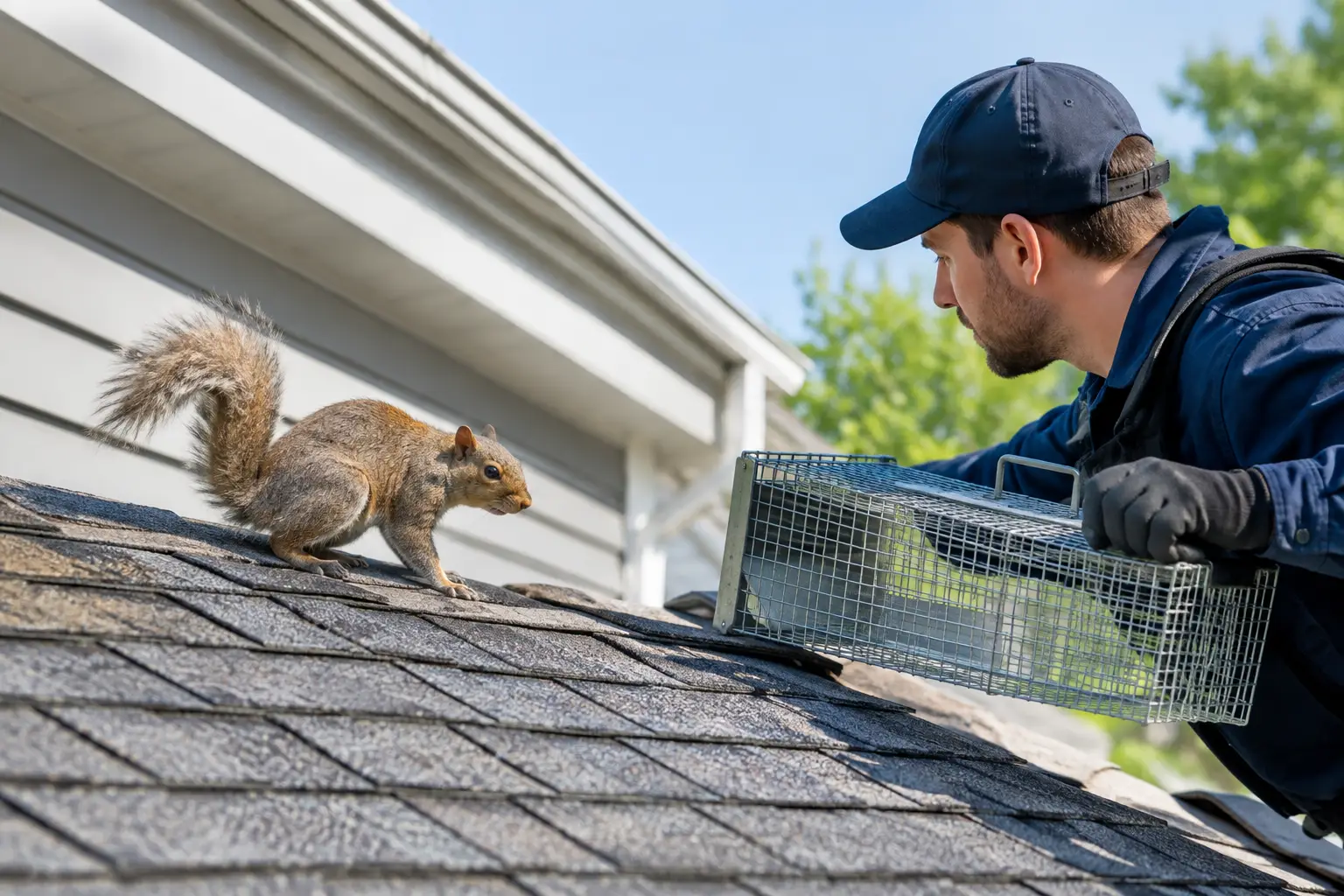
When squirrels are actively using an entry point, one-way doors are often one of the safest and most effective tools. These devices allow squirrels to exit but prevent them from getting back inside. Once all activity has stopped and the structure is confirmed clear, the opening can be permanently sealed.
The timing has to be right. During baby season, sealing adults out while young remain inside creates a much bigger problem. That can lead to odor, noise, and desperate chewing as animals try to re-enter. Humane wildlife control depends on knowing whether the site is simply active or being used as a den with dependent young.
Heavy-gauge metal repairs
Permanent squirrel exclusion depends on materials squirrels cannot tear apart. Heavy-gauge steel screening, galvanized metal flashing, steel vent covers, and professionally fitted repair panels hold up far better than temporary fillers or light mesh.
Squirrels are persistent chewers. They can widen construction gaps, tear into rotted trim, and exploit soft materials quickly. That is why repair quality matters as much as removal. The goal is not to make the opening less attractive. The goal is to make it unusable.
Ridge vent and roof vent protection
Ridge vents are one of the most common squirrel entry points on residential properties. Once compromised, they provide a straight route into the attic. Roof vents, gable vents, and fan housings can also be vulnerable if they are cracked, loose, or poorly screened.
Protective vent systems need to preserve ventilation while blocking wildlife access. Done correctly, vent protection keeps the home breathing properly without leaving a weakness at the roofline. Done poorly, it can create moisture problems or fail under chewing pressure.
Soffit, fascia, and trim reinforcement
Many squirrel intrusions start where roofing meets trim. Water-damaged fascia boards, loose soffits, and aging wood around corners and overhangs are common failure points. In some cases, squirrels do not need a full hole. They only need a soft edge they can enlarge.
Reinforcing these areas with metal edging, fitted repair pieces, and replacement of damaged wood is often necessary. This is where exclusion and repair overlap. If the structure remains weak, the animals usually return.
Methods that usually fail or only work short term
Repellents, loud devices, flashing lights, and strong odors are popular because they sound easy. In the field, they are unreliable. At best, they may disrupt activity briefly. At worst, they push squirrels deeper into wall voids or to another access point on the same building.
Store-bought patch materials also fail often. Expanding foam, caulk alone, plastic screening, and makeshift wood patches are not long-term squirrel barriers. They may close a draft, but they do not stand up to active wildlife pressure.
Tree trimming can help reduce roof access, but it is not a standalone exclusion method. In urban and suburban areas, squirrels use multiple travel routes. They can climb siding, fences, downspouts, and adjacent structures. Trimming branches is useful as part of prevention, not as the fix.
Why attic squirrel exclusion needs more than sealing holes
If squirrels have been inside for more than a short period, the issue is no longer limited to entry points. Nesting material, droppings, urine staining, and compressed insulation are common in active attic sites. In some cases, squirrels chew wiring or damage stored items. Noise complaints may be the first sign, but contamination and structural wear are often already present.
That is why exclusion should be tied to cleanup and repair when needed. Sealing the house while leaving damaged insulation or contaminated areas in place is not complete resolution. The property may still have odor, sanitation concerns, and hidden damage that affects tenants or future occupants.
For landlords and property managers, this becomes even more important in occupied buildings. A professional approach protects the structure, addresses health concerns, and reduces the chance of repeat complaints.
Best squirrel exclusion methods by entry point
Attic and roofline entry
For attic intrusions, the best approach is usually inspection, one-way exit control where appropriate, and reinforced closure of roof gaps, vents, soffits, and ridge openings. If insulation has been disturbed or contaminated, remediation may also be needed.
Chimney and upper exterior gaps
Squirrels sometimes enter through chimney-related gaps, chase covers, or adjoining roof intersections. These areas need fitted metal protection, not loose caps or basic screening that can shift over time.
Wall void and siding access
Where squirrels enter behind siding or through utility penetrations, exclusion requires careful sealing that does not interfere with the building envelope. This is not an area for guesswork, especially on multifamily and commercial properties.
Commercial buildings and mixed-use structures
On commercial properties, squirrel access may involve loading areas, rooftop equipment zones, signage attachments, awnings, and facade gaps. Exclusion has to account for building operations, occupant safety, and long-term maintenance, not just immediate removal.
When professional squirrel exclusion is the better move
If you have repeated squirrel activity, visible roof damage, attic noise, or signs of nesting, this is usually not a DIY situation. The biggest reasons are safety, hidden entry points, and the risk of sealing animals inside. Add ladders, roof work, contaminated insulation, and electrical hazards, and the margin for error gets small fast.
Professional wildlife control is also faster when the problem involves both animal removal and structural repair. That is the difference between stopping one squirrel and solving the actual vulnerability that brought it in.
A full-service provider can inspect the structure, remove active wildlife humanely, install exclusion devices, secure all identified openings, and address cleanup or restoration if the attic or crawl space has been damaged. For urgent cases in the region, Animal Control NYC & NJ handles squirrel removal, exclusion, sanitation, and repair as one coordinated response.
Preventing the next squirrel problem
Prevention is mostly about staying ahead of weak points. Annual roofline checks, prompt repair of water-damaged trim, vent protection, and monitoring after storms all make a difference. Properties with mature trees, older roofing details, or a history of wildlife intrusion should be inspected more carefully.
It also helps to treat squirrel activity as a building issue, not just a nuisance issue. Once squirrels identify a warm, sheltered void with a workable entry point, they tend to return to the same type of location again and again. Durable exclusion stops that cycle.
The right fix is not the fastest patch. It is the repair that leaves the animal out, the structure secured, and the property clean enough that you do not have to deal with the same noise in the ceiling a month from now.