A few pigeons on a ledge can become a serious building problem fast. In NYC, birds nest behind signs, under solar panels, inside exhaust vents, along parapet walls, and in roofline gaps that were never designed to keep wildlife out. Professional bird control NYC service addresses the full problem: humane removal, nesting-site cleanup, sanitation, and permanent exclusion that protects the property from repeat activity.
For homeowners, landlords, property managers, restaurants, warehouses, schools, and office buildings, waiting rarely makes the issue easier. Bird droppings can stain masonry, clog drains, damage equipment, create slipping hazards, and trigger tenant or customer complaints. Nesting materials can obstruct vents and gutters, while birds inside attics or wall voids may bring mites, insects, odors, and noise into the building.
When Bird Control NYC Becomes Urgent
Not every bird on a roof requires intervention. New York has plenty of normal bird activity, especially around parks, waterfronts, busy commercial corridors, and food-service areas. The concern begins when birds establish a nesting or roosting location on the structure itself.
Pigeons are a frequent problem on flat roofs, ledges, HVAC units, loading docks, balconies, and under solar arrays. Their droppings accumulate quickly, particularly where a flock returns to the same protected ledge each day. Starlings and sparrows can enter small gaps around vents, soffits, and building facades. Larger birds may damage screening or create issues around chimneys and roof openings.
Call for professional help when you see repeated bird traffic into a vent or roof gap, nesting material falling from an opening, heavy droppings in one concentrated area, birds trapped indoors, or persistent scratching, fluttering, and chirping from an attic or wall. For commercial properties, act quickly when droppings are affecting entrances, walkways, outdoor dining areas, delivery zones, or mechanical equipment.
A bird that has entered a living space, warehouse, office, or retail area also needs prompt attention. Trying to chase it with brooms, open windows, or improvised traps can injure the bird, spread contamination, and create panic inside an occupied building. A trained technician can safely remove the animal while identifying the point of entry.
Why DIY Bird Removal Often Fails
The visible bird is usually only part of the problem. Removing a nest without finding the access point can result in another nest in the same place days later. Cleaning droppings without installing the right deterrent leaves the surface available for the flock to return. Blocking an opening before confirming that no birds are inside can create odor, insect, and animal-welfare problems.
Bird control also involves legal and seasonal considerations. Many native birds, eggs, and active nests are protected under federal, state, or local rules. The proper response depends on the species, whether a nest is active, where it is located, and the immediate health or safety risk. Pigeons, house sparrows, and starlings are handled differently than protected native species. A professional inspection helps determine what can be removed, what must be left undisturbed, and the safest timing for exclusion work.
There is also a safety issue. NYC rooftops, fire escapes, cornices, sign structures, and elevated mechanical areas are not suitable places for untrained property owners to work. Bird droppings can make surfaces slippery, and damaged roof edges or concealed openings can create fall hazards. Commercial buildings may require coordinated access, roof authorization, tenant communication, and work scheduled around operations.
A Complete Bird Control Process for NYC Properties
Effective bird control begins with an inspection, not a one-size-fits-all deterrent. The technician examines where birds are landing, feeding, nesting, entering, and roosting. On a townhouse, the concern may be a bathroom vent or a gap beneath a fascia board. On a multifamily or commercial building, the issue may involve rooftop equipment, loading areas, façade ledges, solar panels, or drainage systems.
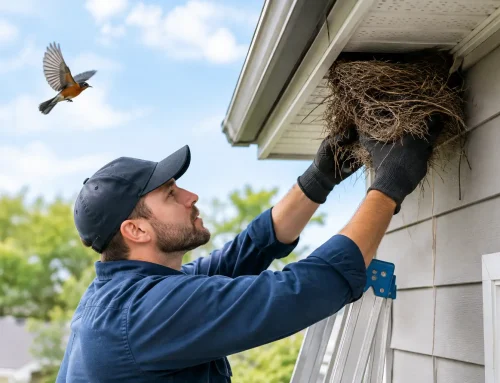
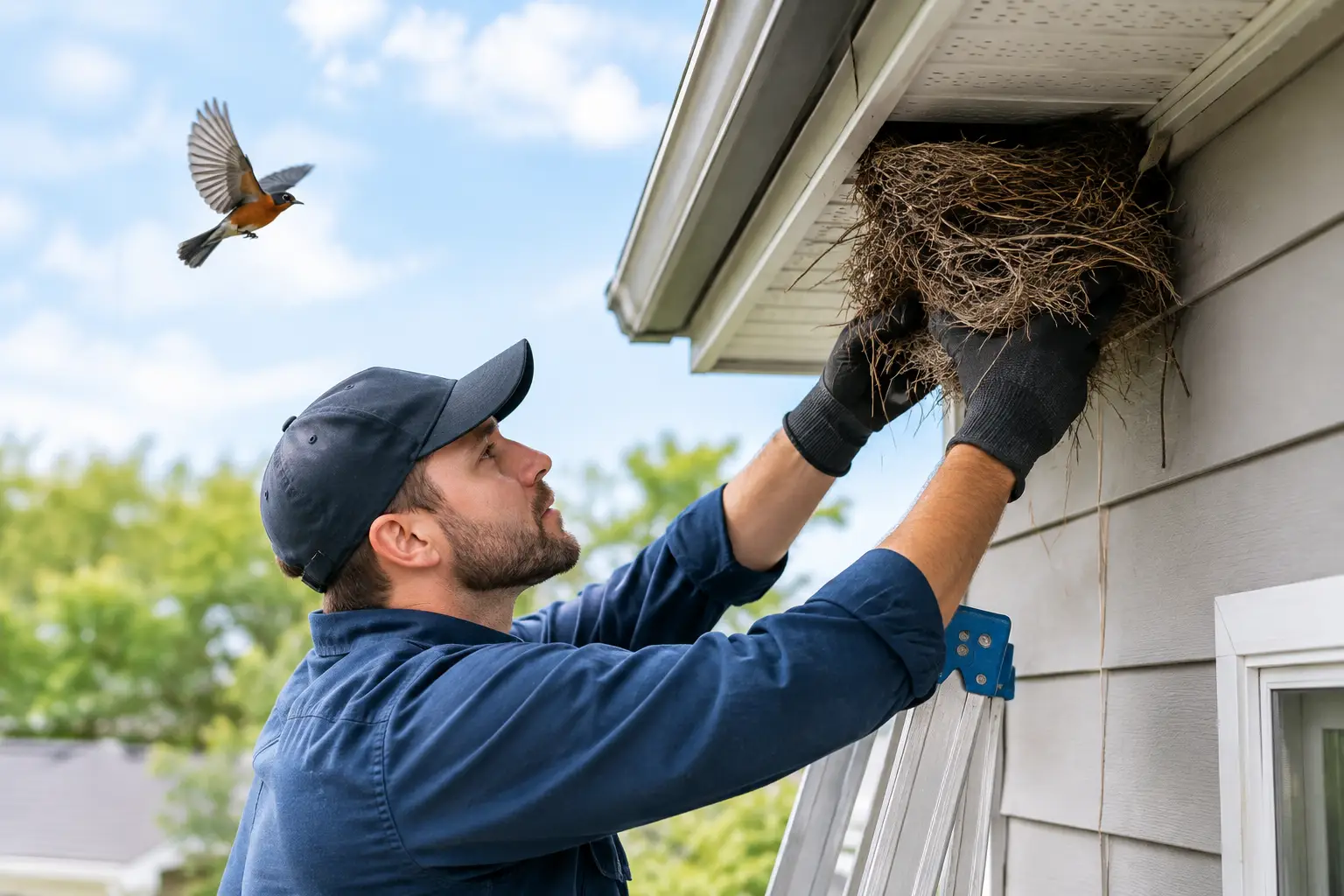
The next step is humane removal or displacement when appropriate. Birds trapped inside a structure must be removed safely. Nesting and roosting areas are evaluated for active birds, eggs, and young before work begins. When removal can proceed, the area is cleared carefully to avoid spreading contaminated dust and debris through the property.
Cleanup matters as much as removal. Bird waste is more than an appearance problem. Large accumulations can harbor bacteria, fungal spores, parasites, and insect activity. Nesting material may contain feathers, droppings, mites, and debris that should not be swept into an attic, vent system, or occupied workspace. Professional remediation can include controlled removal of waste, disinfection, odor treatment, and replacement of contaminated insulation when the damage is severe.
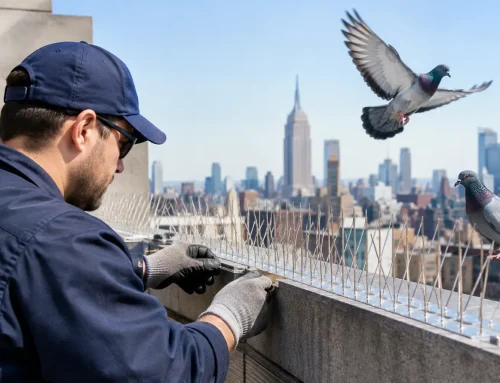
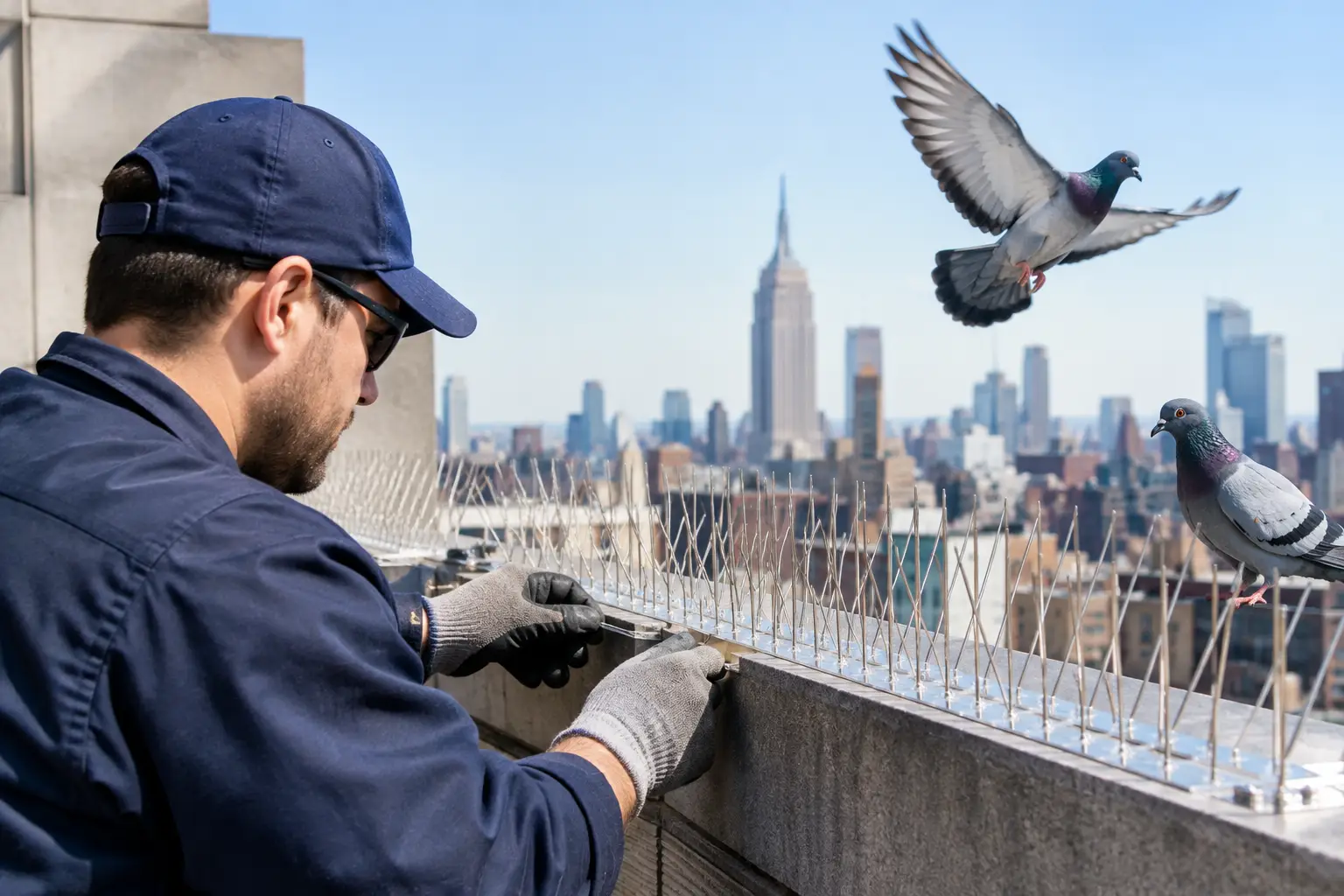
The final step is exclusion and proofing. This is what stops the service call from becoming a recurring expense. Depending on the structure and bird pressure, solutions may include vent covers, chimney caps, hardware cloth, roofline repairs, netting, ledge barriers, solar-panel mesh, screening, or modifications to areas where birds perch and nest. The right material must fit the building and the species. A small sparrow entry point calls for a different repair than a pigeon roost beneath a solar array.
Protecting Solar Panels, Vents, and Roof Systems
Solar panels are one of the most common bird-control concerns in New York City and New Jersey. The sheltered gap under a panel provides warmth, protection from weather, and room for nesting. Pigeons often build up debris beneath the array, creating noise, odors, drainage problems, and a difficult cleanup situation.
Solar-panel bird proofing uses properly fitted mesh around the perimeter of the array. The mesh prevents birds from getting underneath while preserving airflow and access for future panel maintenance. It should be installed without drilling into or damaging the solar equipment. Cheap or poorly secured materials can fail in wind, look unsightly, or create a new snag point for debris.
Vents need equally careful treatment. A missing or broken exterior cover can invite birds into dryer vents, bathroom vents, kitchen exhaust pathways, attic vents, and other openings. The repair must keep wildlife out without reducing necessary airflow. For dryer vents in particular, improper screening can collect lint and create a fire risk. The solution depends on the vent type, location, and manufacturer requirements.
On flat roofs, clogged scuppers, gutters, and drains can lead to water pooling near bird nesting areas. A bird-control visit may reveal maintenance issues that need attention before they cause a roof leak or interior water damage. Complete service looks beyond the birds and addresses the conditions that make the location attractive.
Bird Control for Landlords and Commercial Properties
Property managers often face bird complaints after the problem has already affected tenants, staff, or customers. Residents may report early-morning noise in an attic, droppings on a balcony, a foul smell from a vent, or birds entering through a damaged façade. Businesses may see contamination around outdoor seating, delivery doors, loading docks, signs, and trash handling areas.
The right response balances urgency with a long-term plan. Emergency service is appropriate for a bird inside an occupied area, an obstructed vent, a contamination issue, or a situation creating immediate safety concerns. For ongoing rooftop roosting, a site assessment can identify the highest-pressure areas and prioritize repairs without disrupting daily operations.
Large properties may need a combination of methods rather than one product across the entire building. Netting can be effective in protected loading bays or open structural areas. Ledge barriers may fit narrow perching surfaces. Solar mesh is designed for arrays. Exclusion repairs are best for vents, eaves, and façade gaps. A professional recommendation should explain why a particular method fits the site, not simply sell the same approach for every building.
What to Do Before Help Arrives
Keep people and pets away from concentrated droppings, nests, or a bird that is trapped indoors. Do not handle sick, injured, or dead birds with bare hands. Avoid using poison, glue traps, or makeshift netting, which can harm birds and create a more difficult cleanup situation.
If birds are entering a vent or attic opening, take a photo from a safe distance and note how often you see activity. Do not seal the opening until it has been inspected. If there are young birds inside, closing the gap can leave them trapped and create a larger sanitation problem.
For fast, humane bird removal, cleanup, and exclusion in NYC and NJ, Animal Control NYC & NJ provides professional wildlife trapping and removal service for residential and commercial properties. The goal is not simply to move birds away for a day. It is to restore a clean, safe property and close the vulnerabilities that allowed the problem to start.
The best time to address bird activity is when you first notice repeat nesting or roosting. A small gap, a few scattered droppings, or debris under one solar panel is far easier to correct than a contaminated attic, blocked vent, or roofline full of established nests.