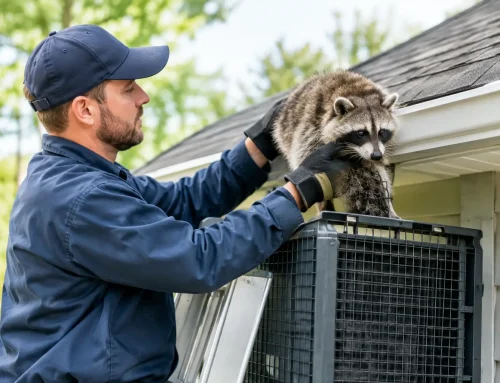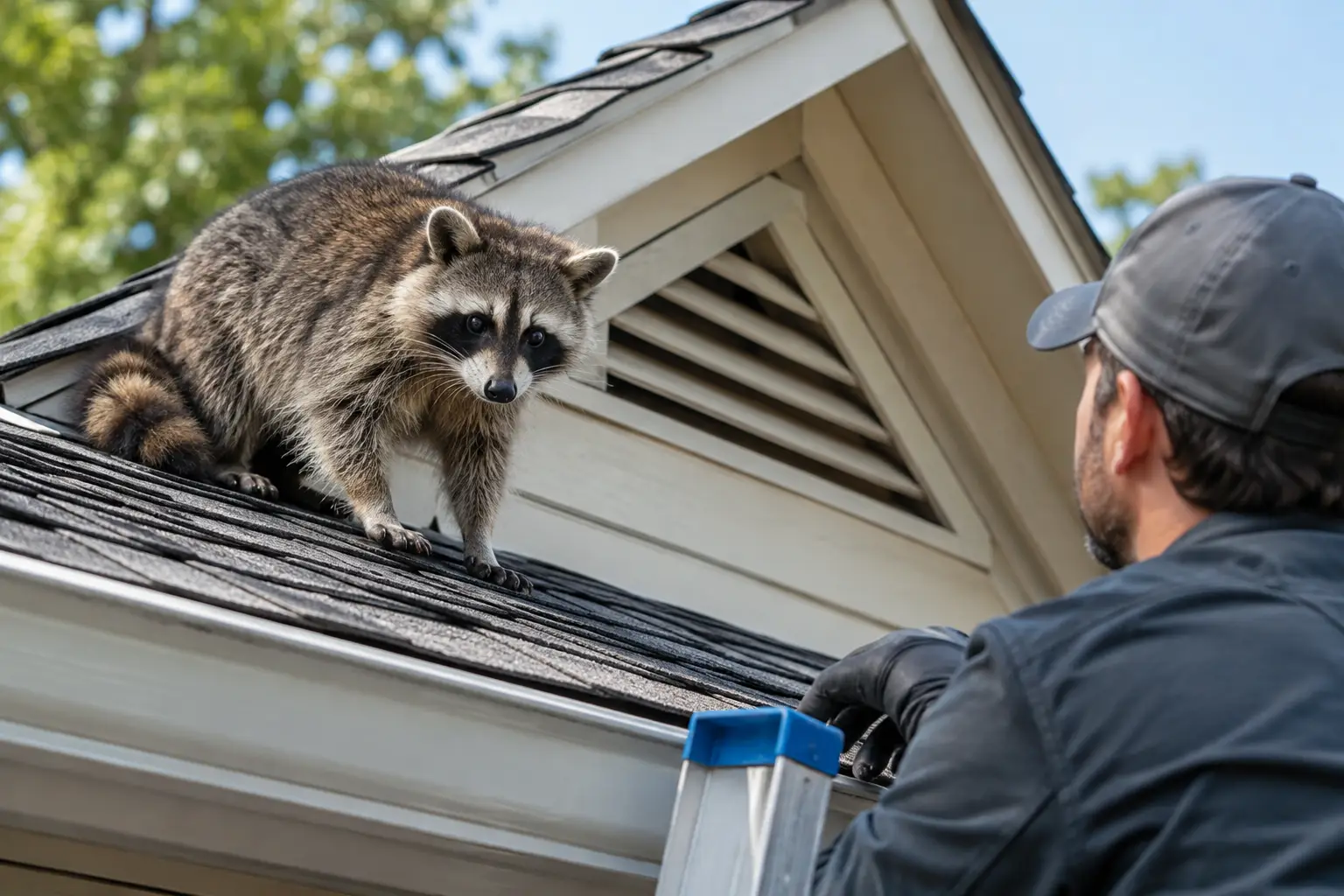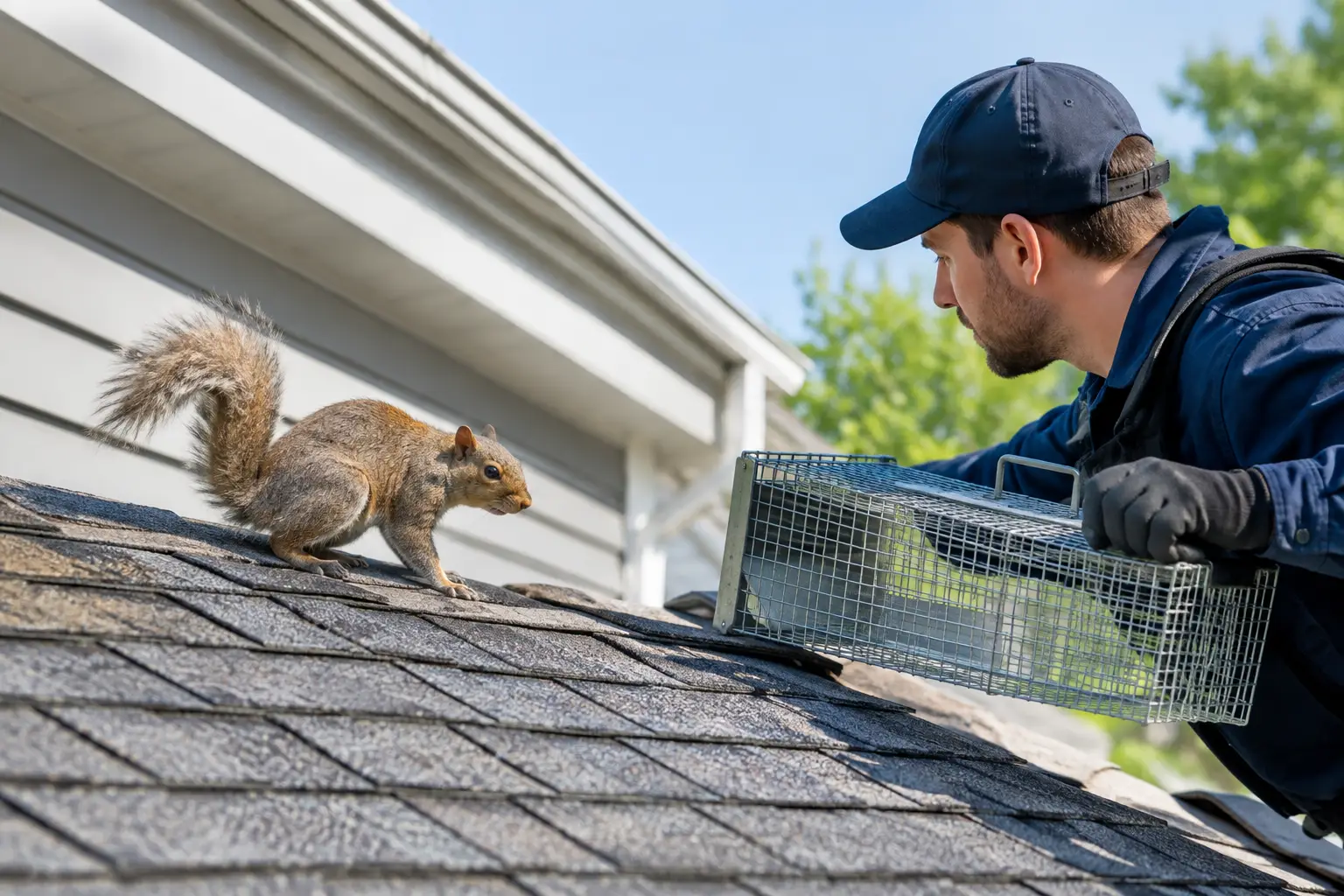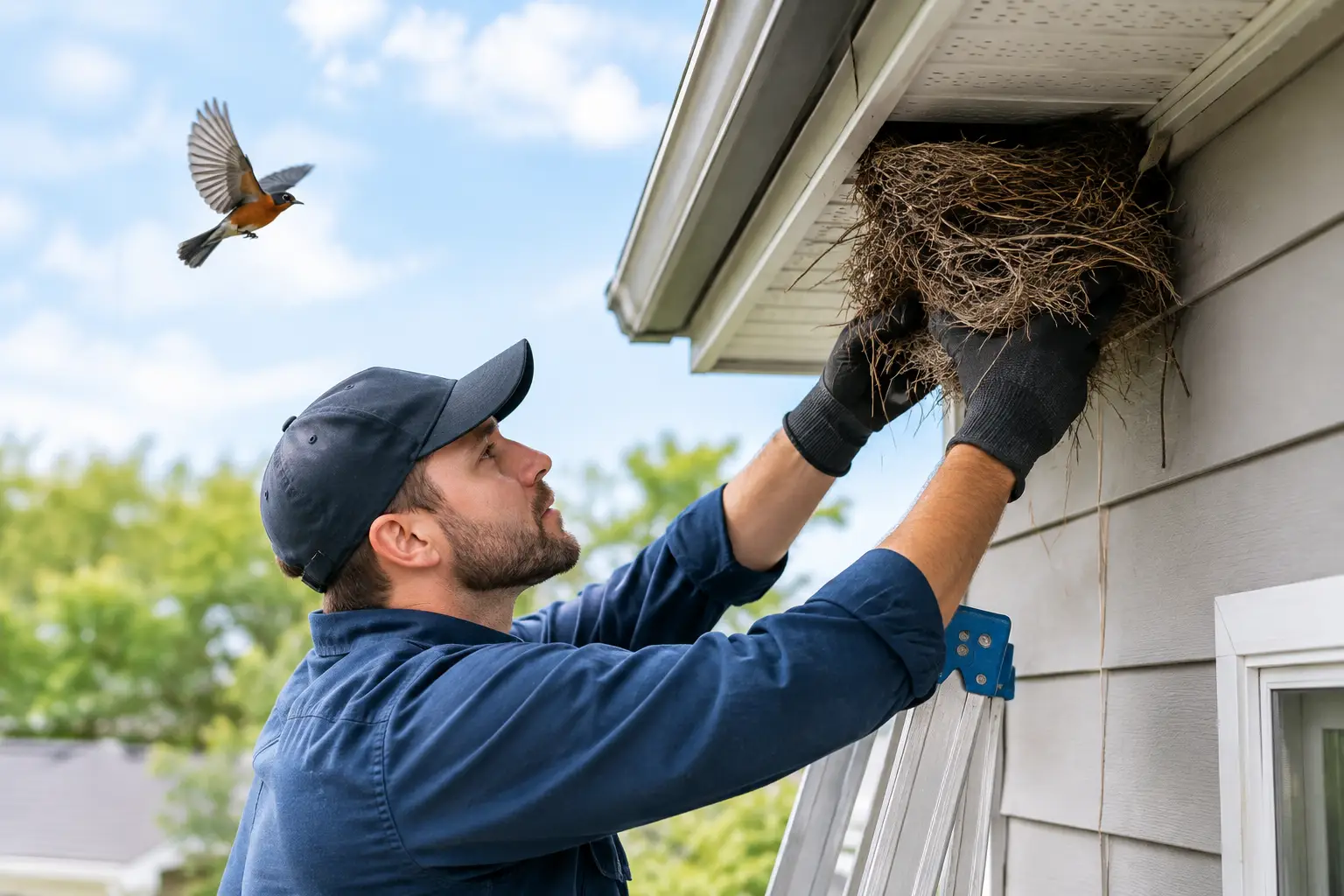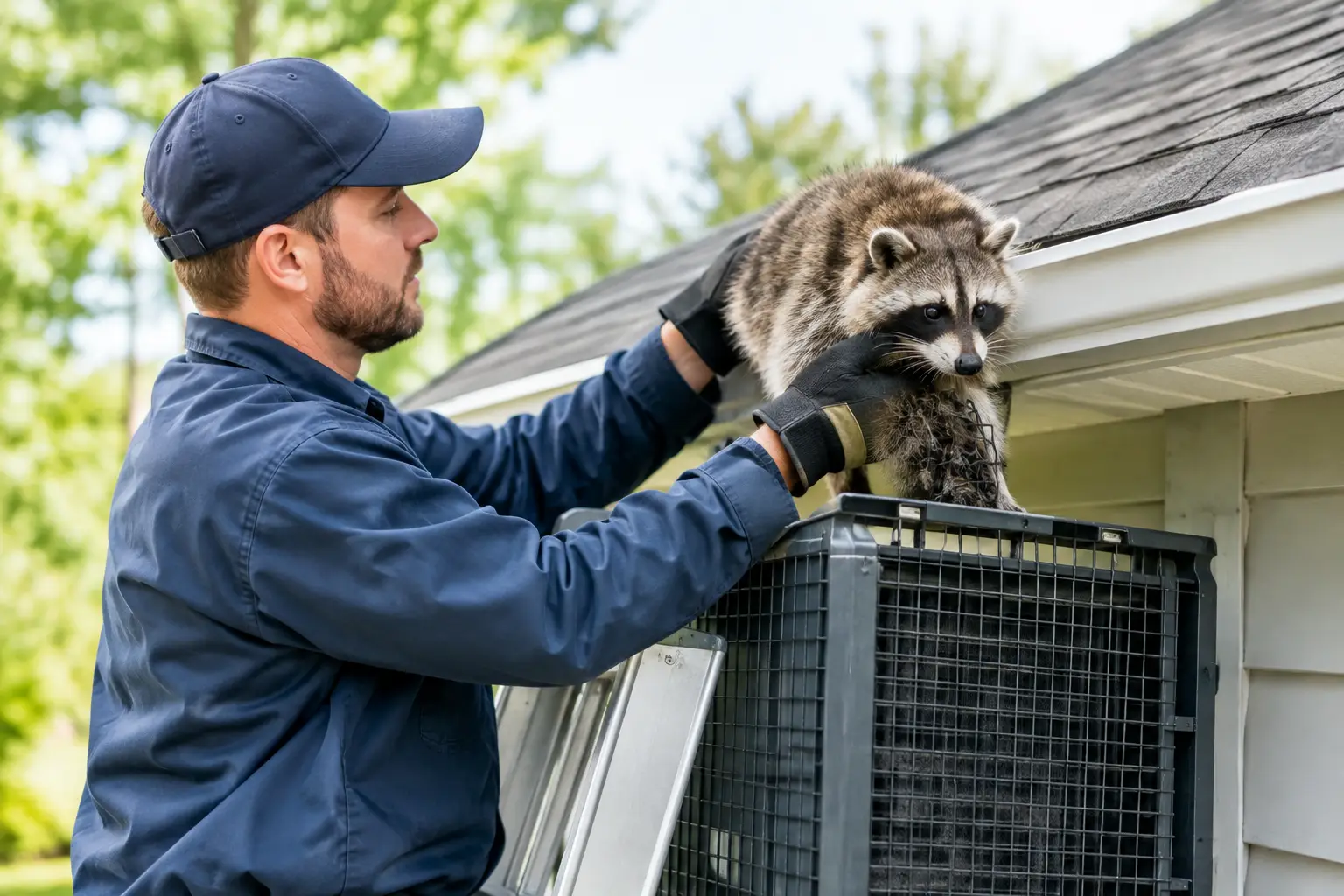
A raccoon removed from an attic can return the same night if the roof gap it used is still open. That is why property owners ask, what does wildlife exclusion mean? Wildlife exclusion is the professional process of finding and sealing the openings animals use to enter a building, after confirming they can leave safely and humanely.
For homes, apartment buildings, restaurants, warehouses, and commercial properties across NYC and New Jersey, exclusion is the step that turns a temporary animal removal into a lasting solution. It addresses the weak points around roofs, vents, siding, foundations, utility lines, crawl spaces, and solar panels before another animal turns the structure into a nesting site.
What Does Wildlife Exclusion Mean in Practice?
Wildlife exclusion means making a structure inaccessible to nuisance animals without causing harm. A technician first identifies the species, locates active entry and exit points, and checks whether young animals may be inside. Then, the property is secured using materials and repair methods designed for the animal involved.
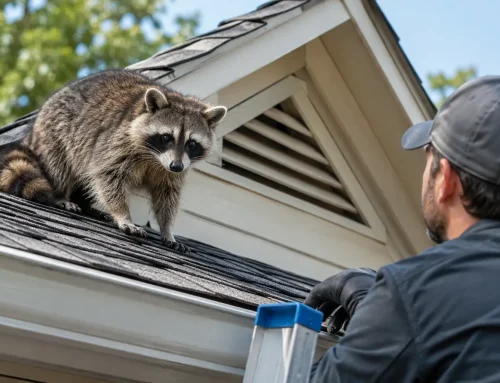
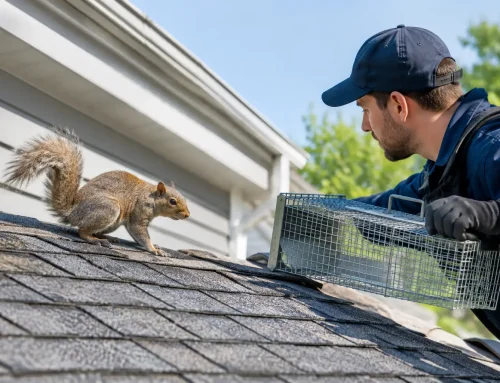
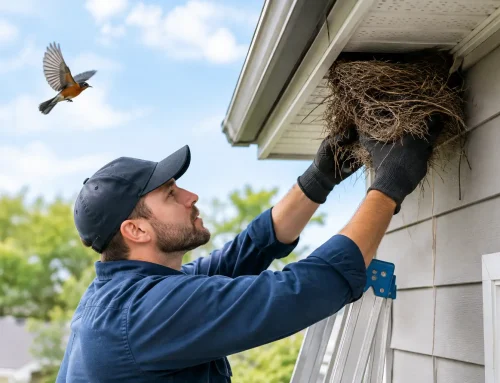
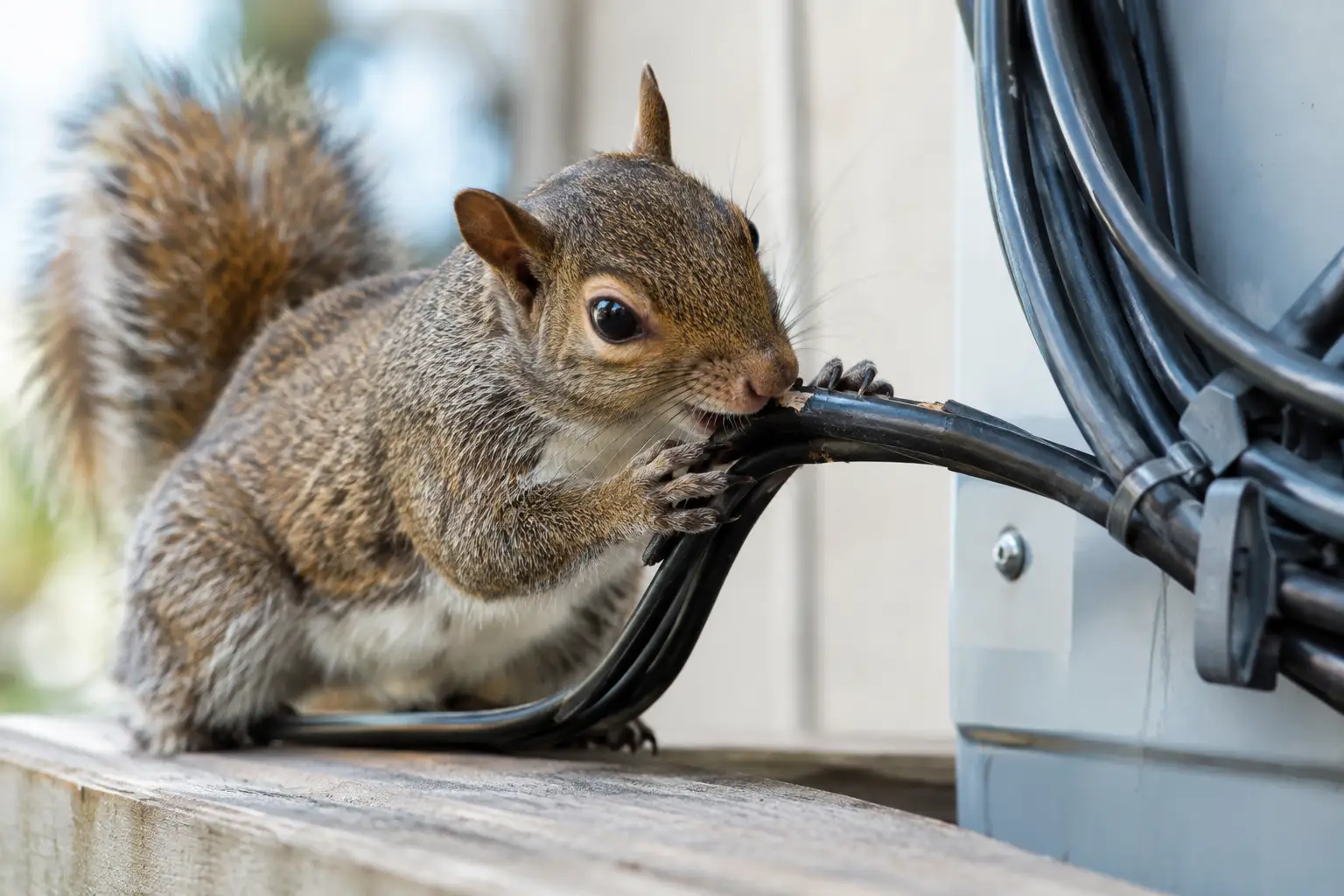
A squirrel can squeeze through an opening that looks too small to matter. Rats can enter through gaps around pipes and damaged foundation vents. Raccoons can pull apart loose soffits, tear open weak roof edges, and force their way through uncapped chimneys. Birds and bats may use gaps behind fascia boards, ridge vents, louvers, and exterior fixtures.
The goal is not to cover every crack with foam or screen. Proper exclusion requires durable, species-specific work. An opening that is adequate for keeping out mice may fail against a raccoon. A repair that blocks adult squirrels but traps babies in an attic creates another urgent problem. Effective wildlife control starts with inspection, timing, and a clear plan for safe removal.
Removal and Exclusion Are Different Services
Animal removal solves the immediate issue: getting the animal out of the building. Wildlife exclusion solves the reason it got in. Many property owners need both.
For example, trapping may remove a raccoon from an attic, but it will not repair the lifted shingle, damaged soffit, or exposed roof return the animal used. Likewise, removing mice from a restaurant storage area does not close the gaps around conduits, doors, drains, or wall penetrations that allow more rodents to enter.
This distinction matters because wildlife is persistent. When an animal has found a warm, dry shelter with access to food or nesting material, it may return repeatedly. Other animals may also follow the scent trails, droppings, and openings left behind. Exclusion removes that access and reduces the chances of another infestation.
Where Animals Commonly Enter NYC and NJ Buildings
Dense city blocks, older homes, multifamily buildings, and suburban properties all have different vulnerabilities. In New York City and New Jersey, technicians regularly find entry points in areas that owners rarely inspect from ground level.
Common access points include roofline gaps, damaged soffits and fascia, open chimney flues, attic vents, loose ridge vents, uncapped exhaust vents, and holes around plumbing or electrical lines. Ground-level problems often include deteriorated foundation vents, crawl space openings, broken basement windows, gaps beneath doors, and damaged siding.
Exterior features can create their own access routes. Overhanging tree branches can give squirrels and raccoons a path to the roof. Gutters packed with debris can contribute to rot around roof edges. Birds may nest beneath solar panels or in commercial loading areas, while rats may travel through utility corridors, trash areas, and gaps in exterior masonry.
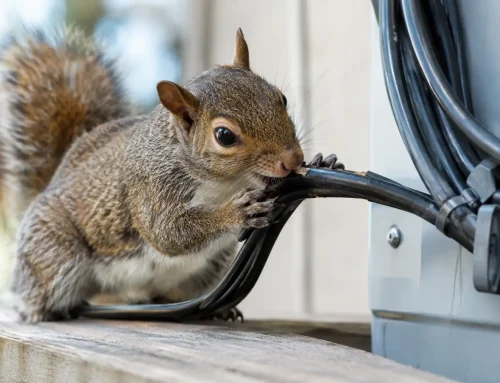
A professional inspection looks beyond the obvious hole. It checks for rub marks, gnawing, nesting material, tracks, grease trails, droppings, chewed insulation, and damaged building materials. These signs help determine which animals are present and whether an opening is currently active.
The Humane Side of Wildlife Exclusion
Humane exclusion is not about sealing an animal inside a wall, attic, or crawl space. It is about allowing active animals to exit while preventing reentry once the space is clear.
In certain cases, one-way exclusion devices may be used. These devices allow an animal to leave through its normal route but prevent it from getting back inside. They must be monitored and installed correctly. A one-way door is not appropriate in every situation, especially when dependent young may still be inside.
Seasonality matters. Spring and early summer are common breeding periods for squirrels, raccoons, bats, and other wildlife. A mother may be leaving an attic or chimney temporarily to find food while babies remain behind. Closing the opening too early can lead to dead animals, odor problems, insects, and additional damage. It can also create an inhumane outcome.
Bat work requires particularly careful handling because bat species may be protected and exclusion timing can be regulated. Bird nesting situations may also have legal restrictions depending on the species and whether eggs or young are present. Professional wildlife technicians assess these conditions before proceeding, rather than taking a one-size-fits-all approach.
What a Complete Exclusion Service Includes
Quality exclusion work is a repair service as much as an animal-control service. The work should match the location, the animal, and the condition of the building.
A typical service begins with a full exterior and interior inspection. The technician identifies primary entry points, secondary openings, animal pathways, and damage that may allow water or pests into the structure. After animals are removed or safely excluded, those openings are repaired using appropriate materials such as heavy-gauge screening, metal flashing, reinforced vent covers, chimney caps, hardware cloth, door sweeps, and secured soffit or fascia materials.
The job may also involve ridge-vent protection, crawl space sealing, roof-edge repair, gutter guard installation, or solar panel animal proofing. In rodent cases, technicians may seal utility penetrations and structural gaps while also addressing conditions that support activity, such as accessible garbage, food storage issues, or moisture problems.
Not every repair needs to be extensive. A single damaged vent cover may be the only entry point. But properties with repeated animal activity often have multiple weaknesses, especially older buildings with worn materials and prior patchwork repairs. A clear inspection report helps property owners understand which repairs are urgent and which are preventive.
Why Cleanup Comes After Exclusion
Sealing entry points is essential, but it does not remove the contamination an infestation can leave behind. Urine, droppings, nesting material, parasites, and carcasses can remain in insulation, wall voids, crawl spaces, and attic corners long after the animal is gone.
Raccoons can leave heavy contamination in attic insulation. Rodent droppings may create health concerns and strong odors in kitchens, basements, and utility rooms. Birds can foul ledges, vents, and rooftop equipment. Bats may leave accumulations of guano that require controlled cleanup.
Depending on the conditions, complete recovery can include removal of soiled insulation, attic restoration, disinfection, deodorizing, mold remediation, and replacement of damaged materials. Cleanup also removes scent cues that can attract other animals back to the same location. For landlords and property managers, this step can help protect tenants, reduce complaints, and restore usable space faster.
Why DIY Sealing Can Make the Problem Worse
It is reasonable to want to close a visible hole quickly, especially after hearing scratching in a wall or seeing an animal near the roof. The risk is closing the wrong opening at the wrong time.
Expanding foam alone is rarely a reliable wildlife barrier. Rodents can chew it, squirrels can tear through it, and raccoons can pull apart weak repairs. Store-bought mesh may rust, bend, or be installed with gaps. More seriously, sealing an active entry point can trap an animal indoors, sending it into living spaces or leaving it to die in an inaccessible area.
A professional approach also distinguishes animal damage from ordinary building wear. Water damage, loose siding, roof leaks, and poor ventilation can contribute to wildlife access. Addressing the underlying condition protects the building more effectively than applying a temporary patch.
When to Schedule Wildlife Exclusion
Schedule an inspection promptly if you hear movement in walls or ceilings, notice droppings, see chewed wires or insulation, find a damaged vent, smell persistent animal odor, or repeatedly spot wildlife entering the same part of the building. Nighttime noises may point to raccoons, rats, mice, or bats. Daytime scurrying around the roofline is often associated with squirrels or birds, though behavior varies.
For commercial properties, act quickly when animal activity affects food storage, customer areas, loading docks, rooftop systems, or tenant spaces. Delays can lead to larger repair bills, sanitation concerns, and continued disruption.
Animal Control NYC & NJ provides wildlife removal, exclusion, cleanup, and structural repair as part of one coordinated service. The right response is not just getting the animal out today. It is making sure your home or building is no longer an easy place for the next one to get in.