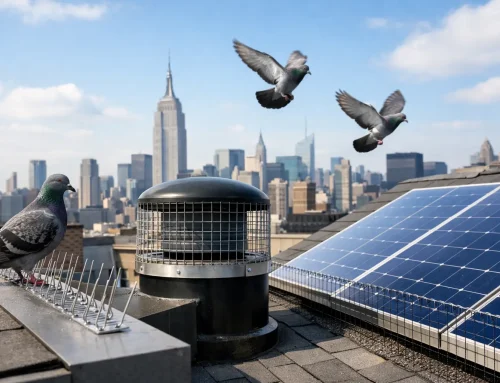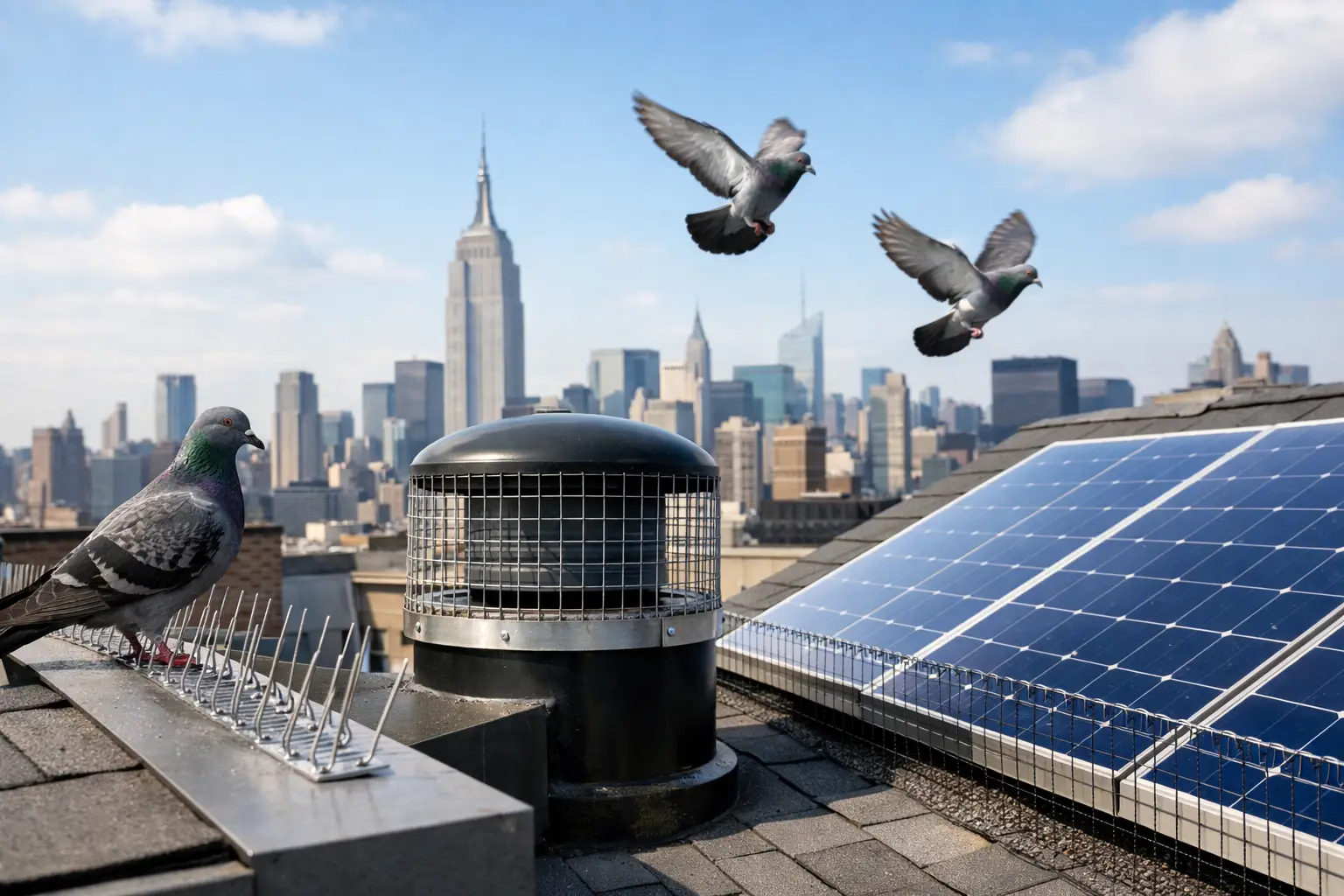
A row of pigeons under solar panels may look like a minor nuisance from the street. On the roof, it can become a sanitation issue, a drainage problem, and a source of costly damage to the solar system and the building below it. For NYC and New Jersey property owners, waiting until birds are visibly nesting or tenants start complaining usually means the problem has already expanded.
Solar panels create a protected, elevated cavity that pigeons actively seek. The space is shaded, warmer than the surrounding roof, and difficult for predators to access. Once a pair finds it, other birds often follow. What begins with a few perched pigeons can turn into a persistent nesting site filled with droppings, feathers, nesting material, and young birds.
Why Pigeons Choose Solar Panels
A solar array gives pigeons nearly everything they need without requiring them to enter the building. The panels shield them from rain, wind, and direct sun, while the roof provides a quiet perch above street traffic and ground predators. In dense parts of New York City and New Jersey, suitable nesting spaces can be limited, which makes unprotected solar installations especially attractive.
The birds do not need a large opening. Even a narrow gap between the panel edge and roof can provide enough access for pigeons to move beneath the system and build a nest. They may return season after season if the opening remains available.
This is why bird activity around panels should not be dismissed as normal rooftop behavior. Pigeons standing on panels, gathering along the roofline, or flying repeatedly into the same area are signs that an inspection is needed.
The Damage Caused by Pigeons Under Solar Panels
The most obvious evidence is droppings. Pigeon waste can accumulate rapidly on panel surfaces, roof shingles, flat roofing materials, gutters, and walkways below. Besides being unsightly, it can reduce solar production by blocking sunlight and leaving residue that requires careful cleaning.
Droppings and nesting debris also interfere with drainage. On flat commercial roofs and low-slope residential roofs, feathers, sticks, and waste can collect around drains and scuppers. Water that cannot drain correctly may pond against roofing materials, increase leak risk, and add stress to the roof structure. A simple bird issue can then become a roofing and water-damage claim.
There is also a risk to the solar equipment. Birds may pull at exposed wiring, leave corrosive waste around components, or build nests close to electrical connections. The panels themselves are durable, but the wiring, mounting areas, and spaces beneath the array are not designed to be a bird habitat. Access for routine solar maintenance can become more difficult when the system is packed with nests and contamination.
Pigeons can create noise and odor problems as well. This matters for apartment buildings, restaurants, warehouses, offices, and homes with bedrooms near the roofline. Coos, scratching, flapping, and young birds calling from beneath panels can disturb occupants early in the morning. As droppings build up, odors can become noticeable around upper-floor windows, balconies, HVAC equipment, and roof access points.
Health and Safety Risks on NYC and NJ Properties
Pigeon droppings, feathers, and nesting material should be handled carefully. Accumulated bird waste can contain bacteria, fungi, and parasites, particularly when it becomes dry and airborne during cleanup. Roof work also presents fall hazards, and solar components add electrical considerations that make do-it-yourself removal a poor choice for many properties.
A homeowner may be tempted to hose down the roof or pull nesting material out from under the panels. That approach often creates a larger mess, pushes debris into gutters, and leaves the opening available for the birds to return. It can also disturb active nests or eggs. Bird control needs to account for the current nesting condition and use humane, lawful methods that do not create unnecessary harm.
For property managers, the issue is broader than the roof. Contamination can affect maintenance staff, create tenant complaints, and complicate access for solar technicians. A documented inspection and professional cleanup help establish what was found, what was removed, and what repairs or exclusion work were completed.
How Professional Solar Panel Bird Proofing Works
Effective control is not just about making pigeons leave for a day. The goal is to remove the birds or nesting material as appropriate, clean the affected area, identify the access route, and close the gap without harming the solar system.
A professional technician begins by inspecting the array, roof edges, gutters, vents, and nearby ledges. This reveals whether pigeons are actively nesting, whether there are young birds present, and how far debris has spread beneath the panels. The inspection should also look for damaged roof materials, blocked drainage points, loose wiring, and areas where pigeons may be entering an attic or wall void.
After the site is evaluated, the work may include humane bird removal, nest and debris removal, droppings cleanup, disinfection, and solar-panel exclusion. The most common exclusion method uses durable mesh secured around the perimeter of the solar array. It blocks bird entry while preserving airflow beneath the panels and allowing the solar system to operate normally.
The mesh must be fitted correctly. Improvised wire, foam, plastic netting, or adhesive products can trap birds, deteriorate in weather, damage panel frames, or make future solar service more difficult. Proper solar panel animal proofing is designed around the array layout, roof type, mounting hardware, and access needed for maintenance.
In some cases, exclusion alone is not enough. If gutters are clogged, roof drains are contaminated, or the roof surface has sustained damage, the property may also need cleanup, gutter service, disinfection, or repairs. Addressing those items in the same service plan prevents the job from ending with the birds gone but the property still compromised.
What Property Owners Should Do Right Away
Do not climb onto the roof to investigate an active pigeon nest. Instead, observe from the ground or a safe window location. Note where birds land, whether they disappear beneath the panels, and whether droppings are collecting on the roof edge, patio, or sidewalk below. If you manage a commercial building, ask maintenance staff whether rooftop drains are flowing properly and whether the solar provider has reported access concerns.
Avoid using poison, sticky products, or loose netting. These methods can injure birds, create legal and cleanup problems, and leave dead animals beneath the solar array. They also do not resolve the entry gap that attracted the pigeons in the first place.
Timing matters. Bird activity increases during nesting periods, and a growing colony is more difficult to remove cleanly than a few early visitors. Prompt service can reduce contamination, protect panel output, and avoid the expense of opening part of the solar array later to remove packed nesting material.
When to Call for Professional Pigeon Control
Call for help when you see repeated pigeon traffic beneath the panels, hear birds moving under the array, find nests or heavy droppings, notice clogged gutters, or suspect a roof leak near the solar installation. Fast action is especially important if birds are near electrical components, HVAC equipment, rooftop dining areas, or occupied residential units.
Animal Control NYC & NJ provides professional wildlife trapping and removal service for residential and commercial properties, including humane bird control, cleanup, and solar panel animal proofing. A qualified response should address the active bird problem, the contamination it leaves behind, and the structural opening that allowed the problem to start.
Your solar panels should lower energy costs, not become a permanent pigeon shelter. If birds are already using the space beneath the array, arrange an inspection before the next nest, blocked drain, or contaminated roof area turns a manageable exclusion job into a larger repair.