A single bat circling a bedroom, scratching above a ceiling, or appearing near a rooftop access door can turn into a serious property and health concern quickly. Professional bat removal NYC service is not just about getting an animal out of a building. The real job is finding how bats entered, removing them humanely, cleaning affected areas, and sealing the structure so the problem does not return.
In New York City, bats commonly enter through roofline gaps, damaged soffits, loose siding, chimney openings, ridge vents, attic louvers, and spaces around utility lines. Many of those openings are small enough to miss from the ground. A property may look secure while a bat colony is using a gap no wider than a few inches.
Why Bat Problems Need a Professional Response
Bats are beneficial wildlife. They consume insects and play a valuable role outdoors. Inside a home, apartment building, warehouse, restaurant, school, or office, however, they create risks that require a controlled response.
The most visible concern is a bat found in a living space. Any direct contact, possible bite, scratch, or situation where a person may have been exposed while sleeping should be taken seriously. Do not handle the bat with bare hands, sweep it out, or try to trap it in a towel. Keep people and pets away from the area and contact the appropriate health authorities and wildlife professionals for guidance.
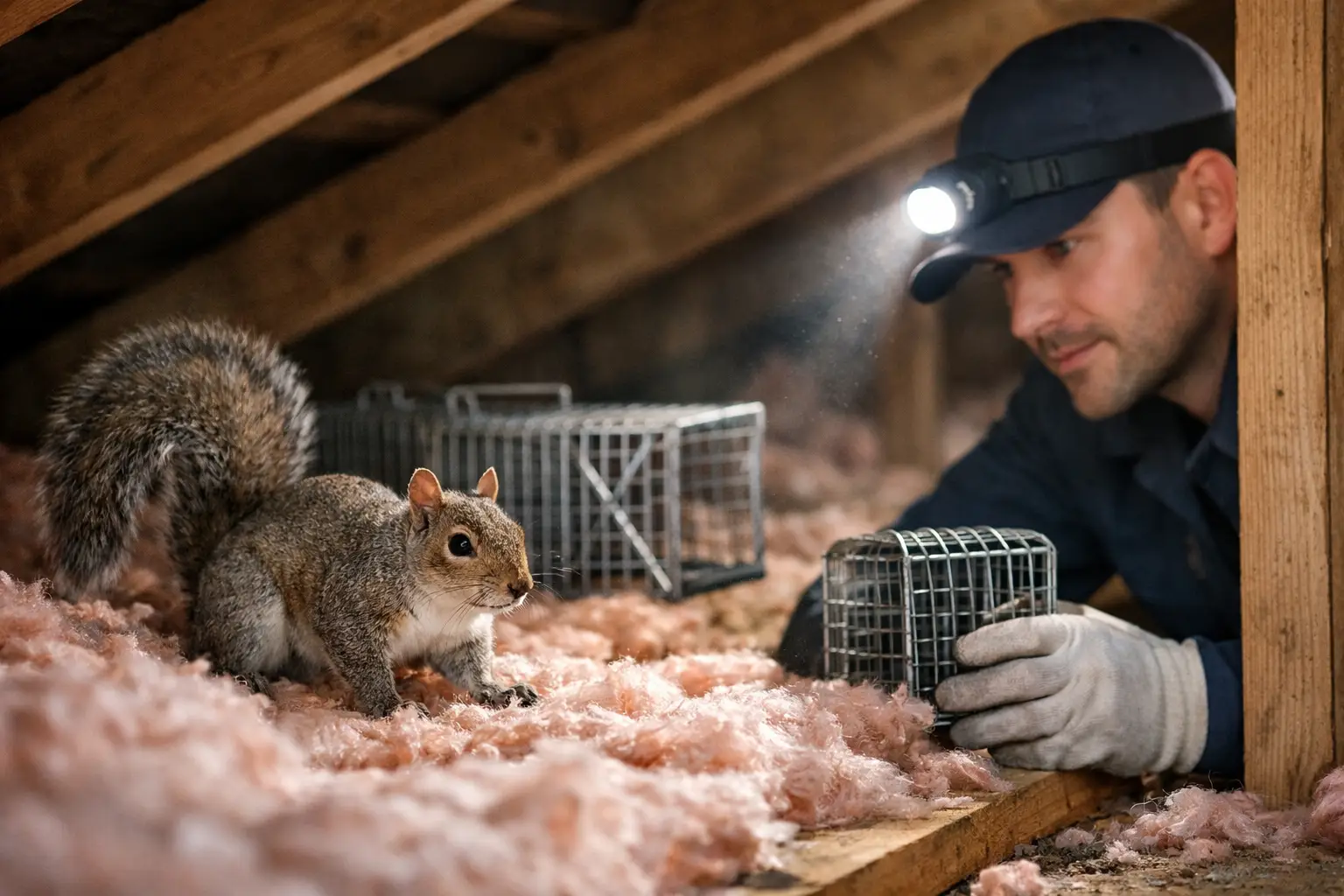
A larger concern often develops quietly in attics and wall voids. Bat droppings, known as guano, can accumulate below a roosting site. Over time, that buildup can stain ceilings, create strong odors, attract insects, damage insulation, and contaminate stored belongings. In severe cases, moisture and waste can contribute to mold conditions or structural deterioration.
There is also the legal and humane side of bat control. Bats cannot simply be trapped and relocated like many nuisance animals. Exclusion methods and timing matter, particularly when young bats may be present and unable to fly. Closing an entry point at the wrong time can trap animals inside or separate flightless pups from their mothers. Effective bat work requires inspection, species-aware planning, and a proper exclusion schedule.
Bat Removal NYC Starts With the Entry Points
The best way to solve a bat problem is to identify the active access points before any repairs are made. A professional inspection focuses on the upper areas of the property, including the roof edge, flashing, chimneys, vents, dormers, fascia boards, siding transitions, and attic penetrations.
Technicians look for staining, guano, grease marks, small gaps, and areas where exterior materials have shifted. At dusk, an observation may be used to confirm where bats are exiting. This step matters because sealing random holes without locating the primary opening can force bats deeper into walls or redirect them into occupied rooms.
Common NYC Bat Entry Areas
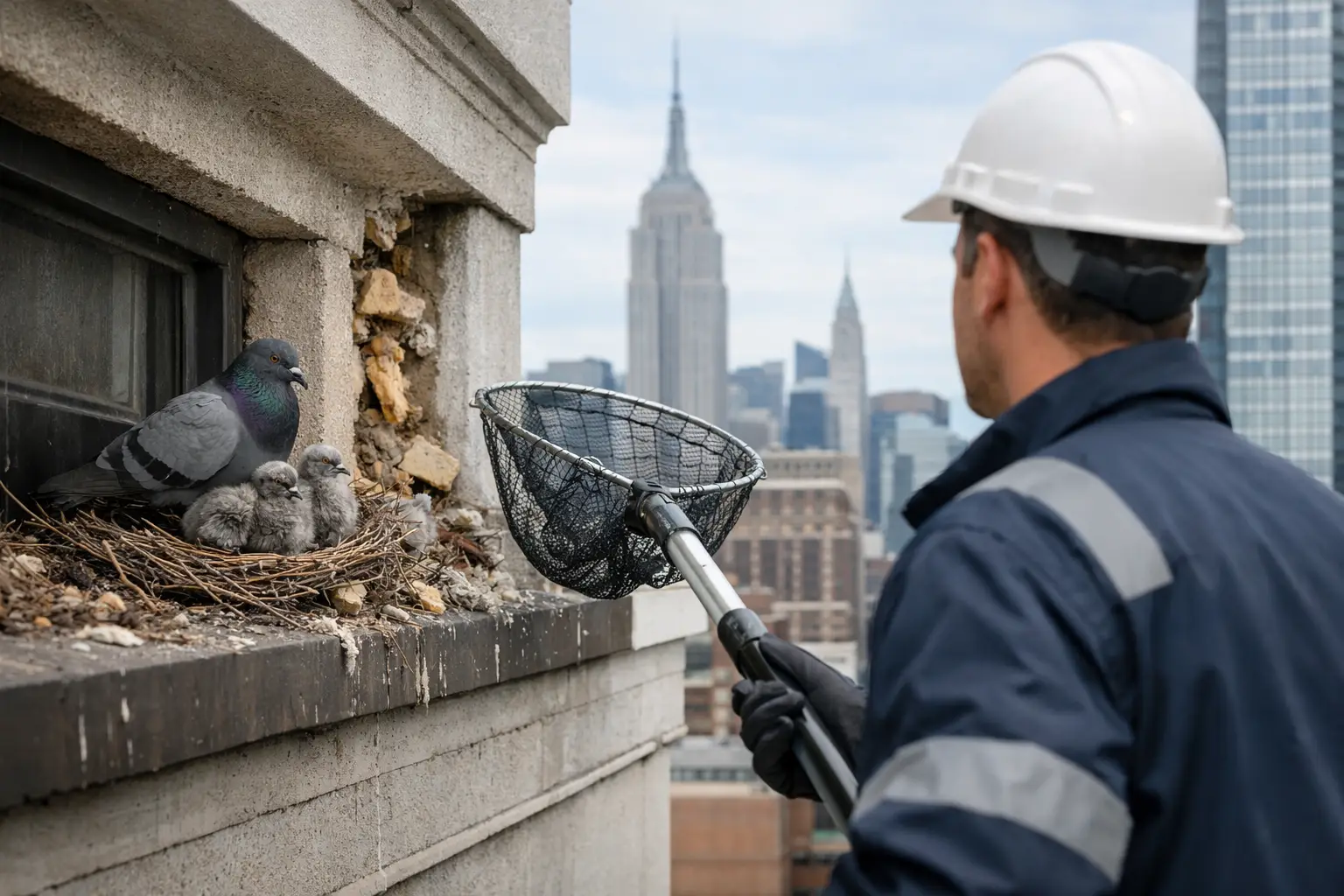
Older brownstones, multifamily buildings, detached homes, and commercial structures each have different weak points. Brick buildings may have gaps around flashing, parapet walls, or deteriorating mortar near roof transitions. Wood-frame homes often develop openings at soffits, gable vents, ridge vents, and trim lines. Commercial properties may have large service penetrations, loading-area gaps, damaged exterior panels, or unprotected rooftop equipment openings.
A bat issue in a top-floor apartment can originate several levels away at the roofline. That is why property managers and landlords should avoid treating a tenant complaint as an isolated indoor event. One bat indoors may indicate an exterior exclusion failure or an attic roost that needs immediate investigation.
Humane Bat Exclusion Is the Long-Term Solution
For an established roost, humane exclusion is generally the most reliable approach. Rather than sealing bats inside, technicians install one-way devices at confirmed exit points. These devices allow bats to leave naturally but prevent them from getting back into the structure.
Once activity has stopped and the exclusion period is complete, the remaining gaps are sealed with durable materials matched to the building. Depending on the property, that may involve securing vents, repairing fascia, closing construction gaps, reinforcing chimney areas, protecting ridge vents, and addressing deteriorated roofline details.
The timing depends on the season, bat activity, the species involved, and whether young may be present. A rushed exclusion may be the wrong solution during sensitive maternity periods. A qualified wildlife control provider will explain the trade-off clearly: immediate indoor safety measures may be needed, while permanent exterior exclusion must be scheduled to protect both occupants and bats.
If a bat is loose in a single room and no one has had contact with it, the response may be more straightforward. If bats are established in an attic, wall, or roof system, the project usually requires exclusion, cleanup, and repair rather than a simple one-time removal.
Cleanup Is Not an Optional Part of Bat Control
Removing access to the building does not remove what bats leave behind. Guano, urine staining, nesting debris, and damaged insulation can remain long after bat activity stops. Ignoring these conditions can leave persistent odor problems and create concerns for residents, employees, customers, or future tenants.
Professional cleanup begins by assessing the extent of contamination. Small, localized deposits may require focused removal and disinfection. Larger attic infestations may call for contaminated insulation removal, HEPA-filtered cleanup procedures, surface treatment, odor control, and installation of new insulation.
For landlords, co-op boards, and commercial facility operators, documentation matters as well. Photos of entry points, damage, cleanup areas, and completed exclusion work can help clarify the scope of repairs and demonstrate that the property issue was addressed properly.
Animal Control NYC & NJ provides bat control as part of a full property-recovery service. That means the work can extend beyond humane removal to attic restoration, sanitization, insulation replacement, crawl space sealing, vent protection, and repairs that help stop future wildlife entry.
What to Do When You Find a Bat Indoors
Your first actions can prevent a stressful situation from becoming more complicated. Keep calm, contain the area if possible, and keep children and pets away. Close interior doors to limit where the bat can travel, but do not block an obvious path that could drive it into a wall void.
Do not use poison, glue traps, smoke, chemical repellents, or ultrasonic devices. These methods do not solve the entry problem and can create dead-animal odors, contamination, or bats trapped inside the structure. They can also lead to repeated calls when surviving bats find another route indoors.
If the bat may have contacted a person or pet, or was discovered in a room with a sleeping person, do not release it before receiving public-health guidance. The correct next step depends on the circumstances. A professional can help coordinate a safe response while protecting the people on the property.
For an active bat entry at night, 24/7 wildlife assistance can be especially valuable. Emergency service should focus on securing the immediate indoor situation first, then scheduling the inspection and exclusion work needed to protect the building permanently.
Protecting Buildings From Future Bat Activity
Bat-proofing is most effective when it is part of ongoing exterior maintenance. Roof repairs, siding projects, chimney work, solar panel installations, and gutter replacement can create or expose small openings that wildlife will use. After any exterior work, inspect the roofline and vent areas for gaps that were left open or materials that no longer fit tightly.
Property owners should also watch for recurring clues: chirping or scratching near dusk, droppings below attic access points, an odor on upper floors, staining near vents, or repeated sightings around the same section of roof. These signs do not always confirm bats, since birds and squirrels can create similar symptoms, but they justify a professional inspection.
The right bat solution protects people without treating wildlife carelessly. If bats have found a way into your NYC property, act before a small access gap becomes an attic contamination, tenant complaint, or health-risk issue. Fast inspection, humane exclusion, careful cleanup, and durable repairs give the building a real chance to stay wildlife-free.